
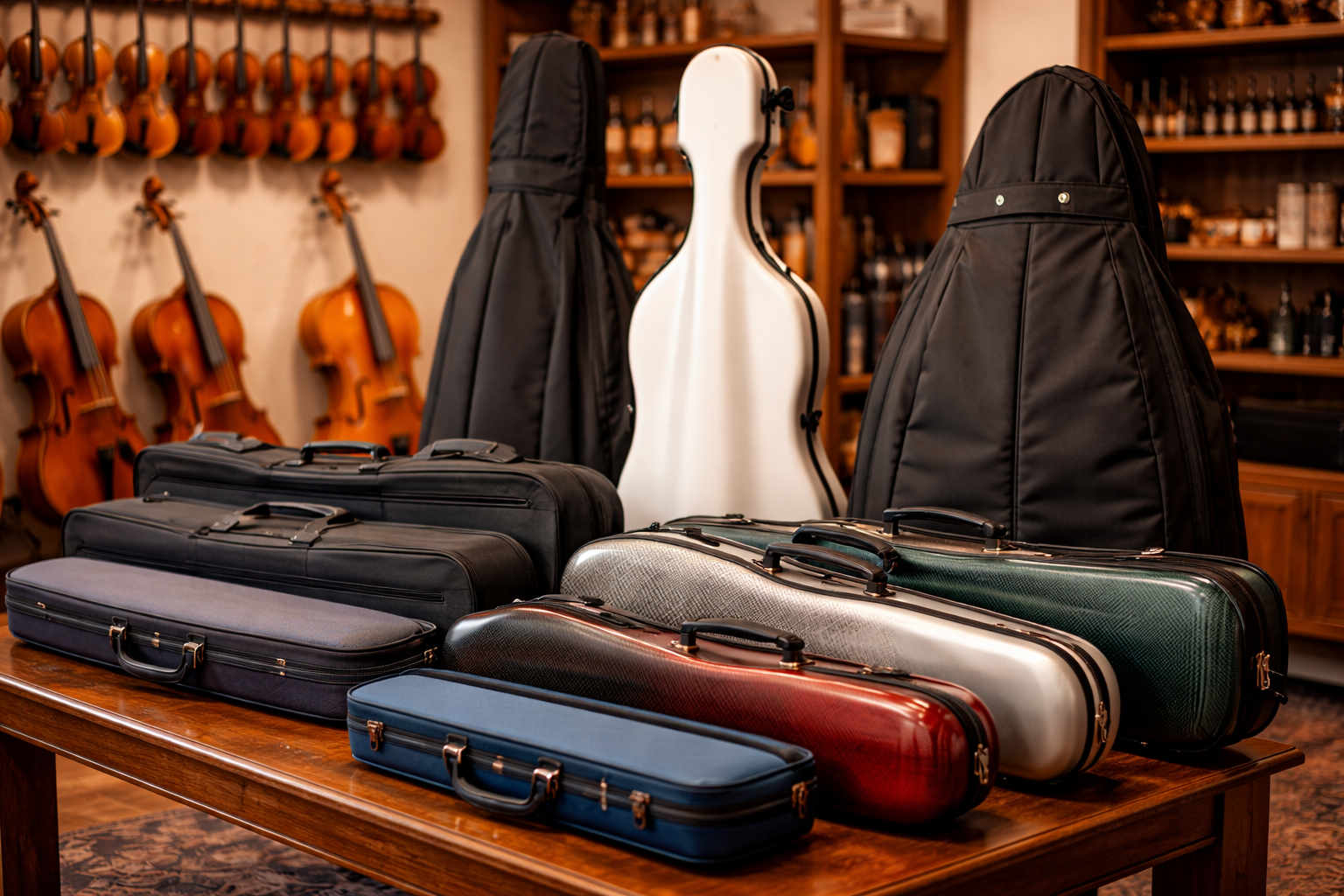
An instrument case is not just something to carry an instrument from one place to another. It is a critical piece of protection that shields a violin, viola, cello, or bass from impacts, pressure, and environmental changes that can cause serious damage. For students especially, cases play a major role in preventing broken seams, cracked tops, and costly repairs.
At Von’s Violin Shop, we sell cases for violins, violas, cellos, and double basses, ranging from basic student cases to high-end professional and tour-grade protection. Understanding how cases differ, and what those differences actually mean in real-world use, helps families make smart choices instead of overbuying or under-protecting an instrument.
Why Instrument Cases Matter More Than Most People Realize
String instruments are built to resonate freely. Thin plates of wood are held together with traditional hide glue, which is strong but intentionally reversible. This construction is what allows instruments to sound the way they do—but it also makes them sensitive to shock, pressure, temperature swings, and humidity.
A good case reduces all of those risks. It absorbs impact when a case is bumped or dropped, resists crushing pressure in crowded hallways or car trunks, and creates a buffer against rapid environmental changes. Over time, the right case can prevent repairs that cost far more than the case itself.
The Standard Student Case: Cloth-Covered Wooden Construction
For most violin and viola students, the standard starting point is a cloth-covered wooden case, and for good reason. These cases use a rigid wooden shell that provides real structural protection, wrapped in durable fabric to keep weight reasonable and resist everyday wear.
Inside, they are padded to support the instrument properly, especially at the neck and scroll, which are common damage points. This style of case strikes a balance between affordability, protection, and usability, making it ideal for daily school use. It is the most common recommendation for beginning and intermediate students.
In terms of cost, violin and viola student cases typically fall in the low hundreds, depending on construction quality and features.
Shaped vs. Oblong Violin and Viola Cases
Violin and viola cases generally come in two familiar shapes: contoured (often called shaped) and oblong.
Shaped cases follow the outline of the instrument itself. They are more compact, easier for students to maneuver through doors and school hallways, and often slightly lighter. For younger students or anyone carrying an instrument frequently, this simplicity is often a major advantage.
Oblong cases are rectangular and offer more interior space. They allow for larger accessory compartments, more bow storage, and sometimes additional padding around the instrument. While they are bulkier, some advancing students prefer oblong cases because of the extra storage and organization they provide.
Neither option is inherently better. The right choice depends on how the instrument is carried and what the player needs to bring with them.
Lightweight and Composite Cases
As students advance, many families begin looking for cases that reduce weight while maintaining protection. This is where cases made from ABS plastic, polycarbonate, or composite materials come into play.
These cases are often lighter than traditional wooden cases and frequently use suspension-style interiors that keep the instrument from resting directly against the shell. This design helps protect against impact by allowing the case to absorb shock rather than transferring it directly to the instrument.
Cases in this category generally cost several hundred dollars and are often associated with well-known manufacturers such as BAM or GEWA. While specific models may vary in availability, Northland can usually source a particular case if a customer has a specific preference.
Cello Cases: From Padded Bags to Hard Protection
Cellos present a unique challenge due to their size and weight. Most student cellos come with padded cello bags, which are practical, lightweight, and easy to carry. These bags work well for short trips, school use, and careful handling.
For students who transport their cello frequently, or for families who want additional protection, hybrid cello cases are a popular upgrade. Hybrid cases combine rigid structural elements with padded exteriors, offering more protection than a bag without the weight and bulk of a full hard shell.
Hard shell cello cases provide the highest level of protection but are heavier and more expensive. They are most often chosen by advanced students, serious players, or anyone who travels regularly with their instrument.
Double Bass Cases: Practical First, Upgrade When Needed
For double basses, padded bags are the standard starting point, and that is what comes with student basses at Northland Violins. A quality padded bass bag offers reasonable protection, reinforced handles, and backpack straps while remaining manageable in size and weight.
As bass players advance, some choose to upgrade to more protective options, especially if they travel frequently or transport the instrument long distances. Reinforced, hybrid, or hard-shell bass cases exist for these situations, though they are larger, heavier, and significantly more expensive.
Most students do perfectly well with a good padded bag, upgrading only when their playing demands it.
Professional and Tour-Level Cases
At the highest end of the spectrum are professional and tour-grade cases designed for extreme transport conditions. These cases use advanced materials, reinforced edges, and highly engineered interiors to protect instruments during frequent travel or shipping.
Manufacturers such as Musafia, BAM, and others are often associated with this tier. These cases can cost anywhere from the high hundreds into the several-thousand-dollar range, depending on construction and features. They are typically chosen by professional musicians or players with valuable instruments who need maximum protection.
Choosing the Right Case at Northland Violins
The best case is not the most expensive one. It is the case that matches how the instrument is actually used.
At Northland Violins, we help customers choose cases based on the instrument, the player’s age and experience level, how often the instrument is transported, and the environments it will be exposed to. Proper fit matters just as much as materials, and a case that does not support the instrument correctly can cause problems over time.
Final Thoughts
Instrument cases exist to solve real-world problems. From cloth-covered wooden student cases to professional tour-grade protection, each type serves a purpose. Understanding those purposes makes it easier to choose wisely and protect an instrument for years to come.
If you’re unsure what level of protection you need, bring your instrument into Northland Violins. We’ll help you find a case that fits properly and suits how you actually play and travel — not one that’s overkill or under-protective.