
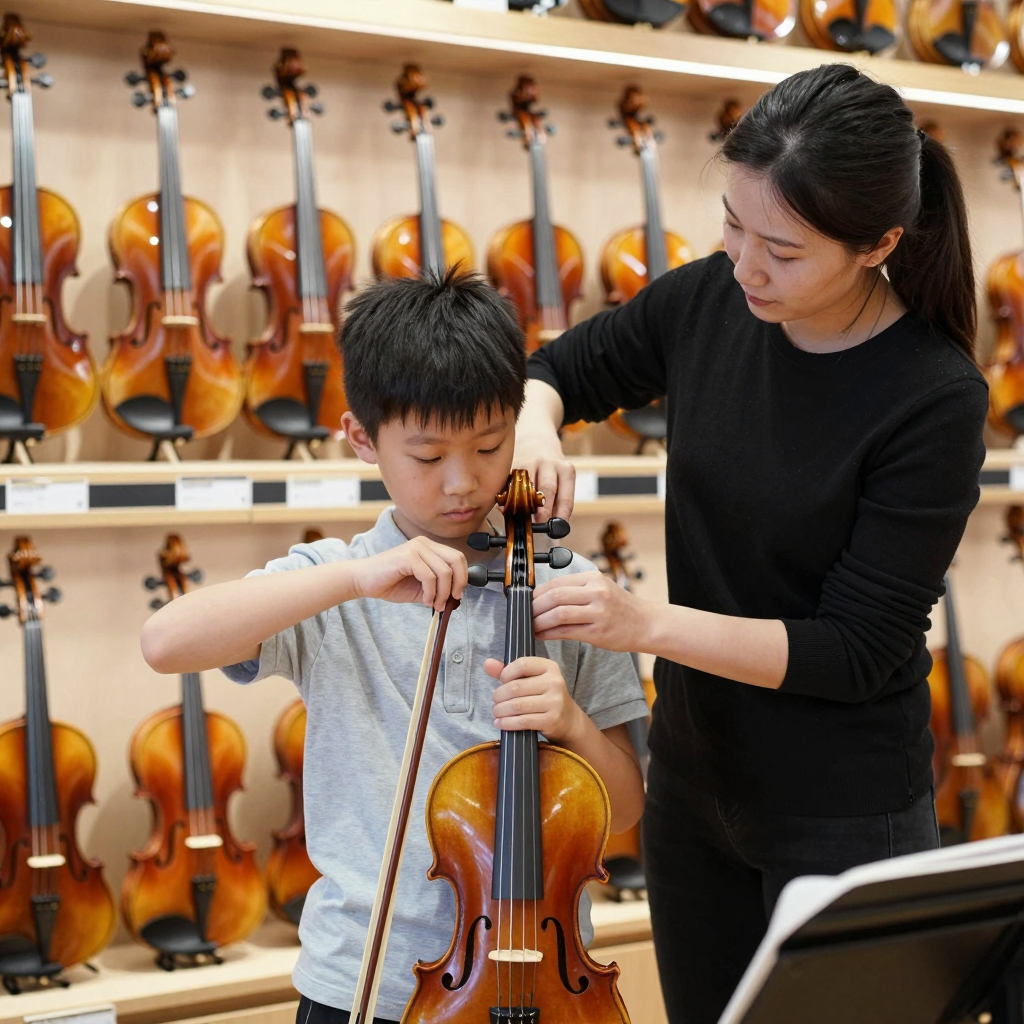
Choosing the correct size instrument is one of the most important steps in setting a student up for success in orchestra.
An instrument that’s too big can cause discomfort, poor technique, and frustration. One that’s too small can limit tone and progress. The good news is that string instruments come in fractional sizes, and there are clear, reliable ways to determine the right fit.
Below is a breakdown by instrument.
Why Proper Instrument Size Matters
The correct size allows a student to:
- Hold the instrument comfortably
- Use proper posture and hand position
- Reach notes without strain
- Develop good habits that prevent injury
This is especially important for younger students, who will likely need to change sizes as they grow.
Violin Size Guide
Violins come in the widest range of fractional sizes, making proper sizing especially important.
Common violin sizes
- 1/16
- 1/10
- 1/8
- 1/4
- 1/2
- 3/4
- 4/4 (full size)
How violin sizing works
The most common method is the arm-length test:
- The student holds the violin under their chin
- The left arm is extended
- The fingers should comfortably reach around the scroll without locking the elbow
- The elbow should make a 90 degree angle
Age is only a rough guideline. Two students of the same age can require very different sizes. https://www.northlandviolins.com can help you with any instrument sizing.
Viola Size Guide
Violas are sized differently than violins and are measured by body length, not fractions.
Common viola sizes
- 12″
- 13″
- 14″
- 15″
- 15.5″
- 16″
How viola sizing works
Viola sizing depends on:
- Arm length
- Hand size
- Overall comfort
Unlike violins, there is no “one-size-fits-all” full-size viola. Many adult players use different sizes depending on comfort and reach.
Cello Size Guide
Cellos are large instruments, so proper sizing is critical for posture and safety.
Common cello sizes
- 1/10
- 1/8
- 1/4
- 1/2
- 3/4
- 4/4 (full size)
How cello sizing works
When seated:
- The endpin should allow the cello to rest against the chest
- The peg of the C string (top left peg) should be near the ear
- Knees should comfortably contact the sides of the cello
A student should never have to hunch or stretch to play.
Double Bass Size Guide
Double bass sizing is the least intuitive and often surprises parents.
Common bass sizes
- 1/4
- 1/2
- 3/4 (most common for students and adults)
- 4/4 (rare and usually professional only)
How bass sizing works
Most students—including many adults—play a 3/4 bass. Height, arm length, and strength matter far more than age.
Bass sizing should always be confirmed in person whenever possible.
A visit to Northland Violins by the student (and their parents) will allow for a personal consultation, where the student can try different sized instruments before choosing the best one for their individual needs.
What If My Student Is Between Sizes?
When a student is between sizes:
- Smaller is usually safer than larger
- Comfort and reach matter more than age
- Teachers and violin shops can help fine-tune the decision
Students grow quickly, which is why renting is often recommended in the early years.
A Note About Growing Students
Children typically move up instrument sizes every 12–24 months during early school years. This is completely normal.
When renting from Northland Violins, size changes are included at no charge. If a student outgrows an instrument, it can be exchanged for the correct size, making growth stress-free for families.
When in Doubt, Get Help
The best sizing decisions are made with:
- An orchestra teacher’s input
- A professional fitting at Northland Violins or Von’s Violin Shop
- The student physically holding the instrument
Guessing or buying based on age alone often leads to frustration later.
Final Thoughts
The right size instrument makes learning easier, more comfortable, and more enjoyable. Proper fit supports good technique from day one and helps students stay confident as they progress.