
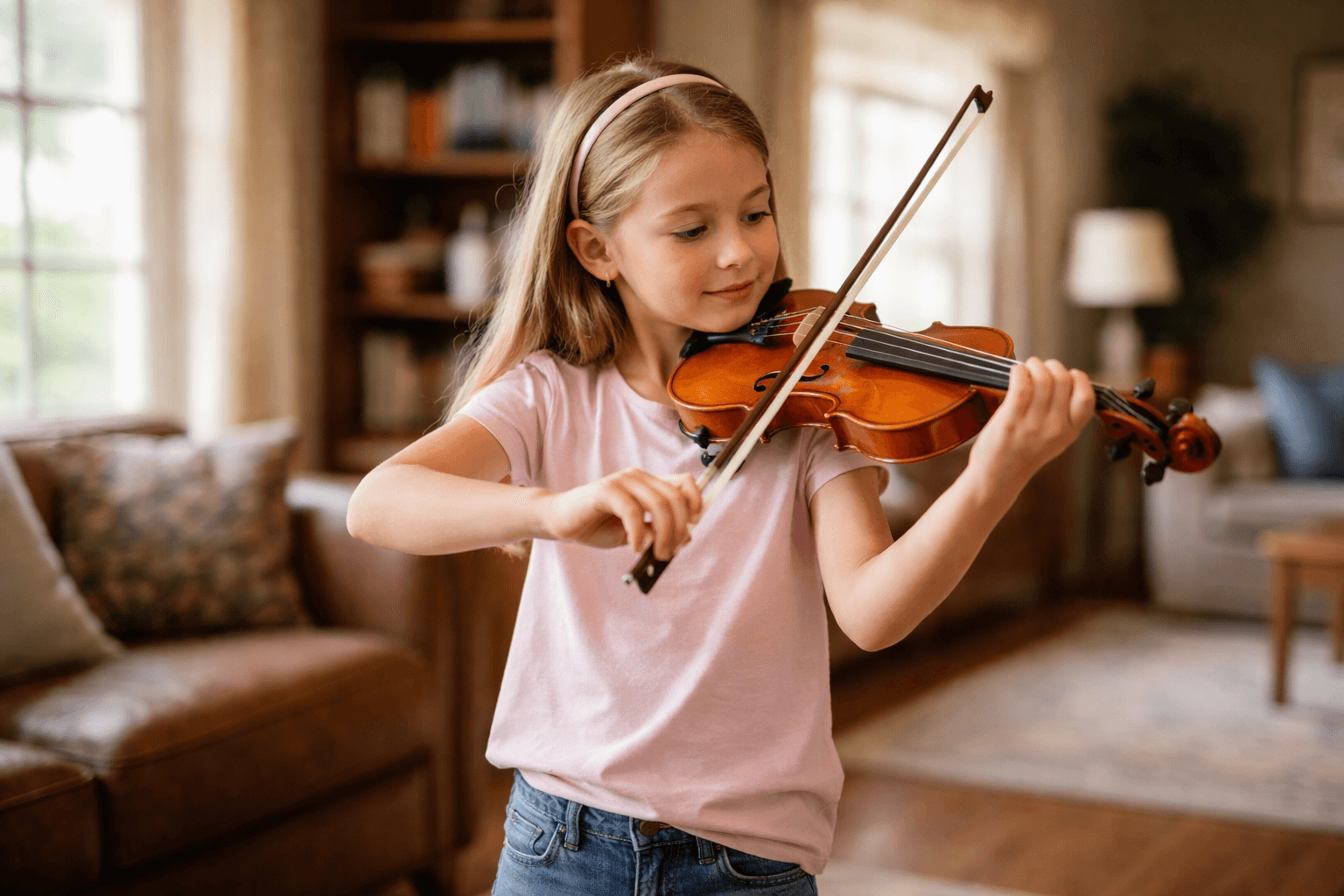
One of the most common questions parents ask when their child shows interest in music is, “What age is the right age to start?” When it comes to orchestral string instruments like violin, viola, cello, and bass, there is no single answer that applies to every child. Instead of a strict age requirement, the decision depends on a combination of physical readiness, attention span, and interest.
Understanding how age fits into the bigger picture can help parents make informed, confident choices without feeling rushed or behind.
There Is No “Too Early” or “Too Late” Rule
Children can begin learning string instruments at a wide range of ages. Some start as young as four or five, while others begin in elementary or middle school. All of these starting points are normal and valid.
What matters most is not the child’s age on paper, but whether they are ready to engage with the instrument in a positive way. A child who is curious, able to focus for short periods, and interested in making music is often ready to begin, regardless of whether they are five or eight.
Likewise, starting later does not put a child at a disadvantage. Many students who begin in middle school progress quickly and develop a strong love for music.
Physical Readiness Matters More Than Age
One of the reasons parents worry about age is size. String instruments come in many different sizes, including very small fractional instruments designed specifically for young children. This makes it possible for students to start earlier than many parents expect.
That said, physical readiness still matters. A child should be able to:
- Hold the instrument comfortably
- Use both hands independently
- Maintain basic posture for short periods
If an instrument is too large or awkward, learning becomes frustrating rather than fun. At Northland Violins, students are always sized properly so the instrument fits their body, which makes early learning far more comfortable.
Attention Span and Emotional Readiness
Just as important as physical size is a child’s ability to focus and follow instructions. Beginning string lessons involve repetition, listening, and patience. For very young children, lessons are often short and playful, focusing on simple skills and musical exploration.
A child does not need to sit still for an hour to begin. Even ten or fifteen minutes of focused activity can be enough at first. What matters is that the child can engage without becoming overwhelmed or resistant.
Parents know their children best. If music feels like an exciting activity rather than a forced task, that is a strong indicator that the timing is right.
Typical Starting Ages by Instrument
While there is significant overlap, some general trends can help parents understand how age relates to each instrument.
Violin
Violin is often the earliest starting instrument. Because it comes in very small sizes, children can begin as young as four or five if they show interest and readiness. Violin is also the most common entry point in school orchestra programs.
Viola
Viola is slightly larger than violin and usually starts a bit later. Many students begin on violin and transition to viola as they grow, though some start directly on viola once they are physically ready.
Cello
Cello can be started by younger children as well, often around six or seven, thanks to fractional sizing. Because the cello is played seated and supported by the floor, some children find it physically comfortable even at a young age.
Bass
Bass is the largest instrument and typically starts later, often in late elementary or middle school. However, student-sized basses do exist, and motivated younger students can begin earlier with proper sizing and guidance.
These are general patterns, not rules. Individual readiness always comes first.
School Programs and Private Lessons
Many students begin strings through school orchestra programs, which often start in elementary or middle school. Others begin earlier through private lessons or community programs.
Both paths are valid. School programs provide group learning and social motivation, while private lessons allow for more individualized pacing. Age alone does not determine which option is best.
Starting at the Right Time Builds Confidence
Starting when a child is ready helps create positive early experiences with music. An appropriately sized instrument, realistic expectations, and supportive instruction make learning enjoyable rather than stressful.
When children feel successful early on, they are more likely to continue playing and develop a lasting relationship with music.
Final Thoughts for Parents
There is no perfect age to start a string instrument. Some children are ready at five, others at eight or ten, and all of those timelines are normal. Physical size, attention span, and genuine interest matter far more than a number on a calendar.
If you are unsure whether your child is ready, learning more and asking questions is always a good next step. Northland Violins and Vons Violin Shop work with families at every stage, helping parents understand options and feel comfortable with the process.
If you still have questions after reading this, you are always welcome to contact Northland Violins to learn more and talk through what might work best for your child.